Trump administration pledges $15 billion to farmers ahead of midterms
The USDA announced a package of payments and loans to offset rising diesel and fertilizer costs in the final days before the November 3 election.
By Alexei Petit ·
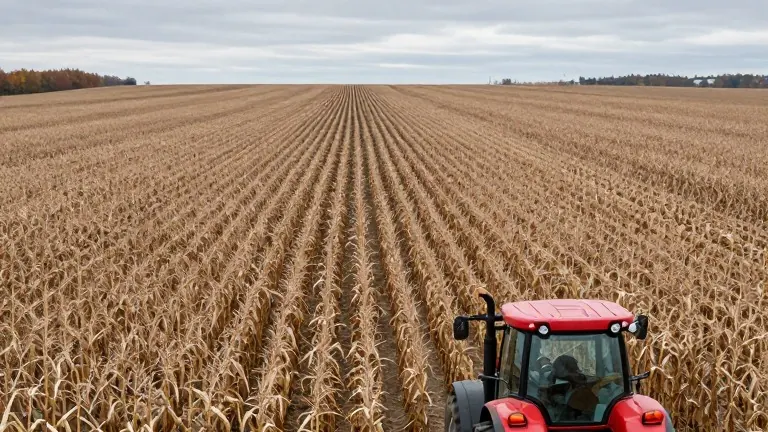
The Trump administration has committed $15 billion in financial support to agricultural producers in the weeks leading up to the midterm elections. These funds are designed to counteract the sharp rise in diesel and fertilizer prices that farmers have faced due to recent tariffs and the war in Iran.
More than half of the total package will fund an $8 billion one-time payment plan for farmers dealing with soaring fuel costs. The Department of Agriculture stated that it will release further details on these payments during the current month, though the specific timeline for disbursement remains unclear. Diesel is a critical input for operating trucks, tractors, and combines.
Gregg Ibendahl, a farm management specialist at Kansas State University, estimated that the payments would cover the increase in fuel costs and potentially assist with high fertilizer prices. He noted that while these ad hoc payments help farmers who might otherwise operate at a loss this year, they do not solve the underlying price drivers.
The remainder of the $15 billion is allocated across several sectors. At least $5 billion is designated for guaranteed loans for ranchers and fishermen. An additional $1.8 billion is set aside for producers and landowners who participate in conservation programs. The agency also earmarked $573 million for fertilizer manufacturing projects, $57 million for expanding meat processors, and $86.6 million in grants for innovative specialty crop projects.
Beyond direct payments, the USDA announced it would purchase up to $472.5 million in agricultural commodities to support producers and charitable programs. Other initiatives include expanding the sales of off-road diesel, improving the transparency of cattle sale data, and strengthening wolf management policies to protect livestock. The agency also plans $13.8 billion in safety net program payments for eligible producers for the 2025 crop year.
Farmers are currently operating in a difficult environment. Diesel prices averaged $6.32 per gallon on Friday, according to motor club AAA. This figure is 70% higher than the price from one year ago, meaning a full 100-gallon tank costs $260 more than it did last year. Tariffs imposed last year increased equipment expenses, and trade tensions with China have led to a near boycott of U.S. agricultural goods.
Alexandra Middlewood, an associate professor of political science at Wichita State University, reported mixed reactions from farmers. Many are relieved that their businesses will survive the year, but they view these programs as temporary bailouts rather than long-term solutions. She noted that cost of living and health care access remain top concerns for rural voters, who feel the administration has not done enough to address these issues.
Michael Smith, a political science professor at Emporia State University, observed that while many rural voters admire President Trump, some of his policies have negatively impacted the agricultural industry. Immigrant deportations have threatened the labor force, while cuts to foreign aid and SNAP food stamps have hurt the market for agricultural products. Smith pointed out that while the president is not on the ballot this year, his policies are effectively being judged by voters.
Middlewood does not expect frustrated rural voters to shift entirely to the Democratic Party, given the region's history as a Republican stronghold. However, she suggested that some voters may choose to sit out the election or vote for independent candidates. She stated that independent voters will be decisive in determining the outcome of this year's races.
Source: MySA
More Business · Business Complaints · Report a business · Got a Story?