Trump heads to Iowa and Kansas as GOP braces for defensive midterm
The president is rallying in states he previously dominated while Democrats in Michigan deal with a primary rival endorsing the Republican nominee.
By Alexei Petit ·
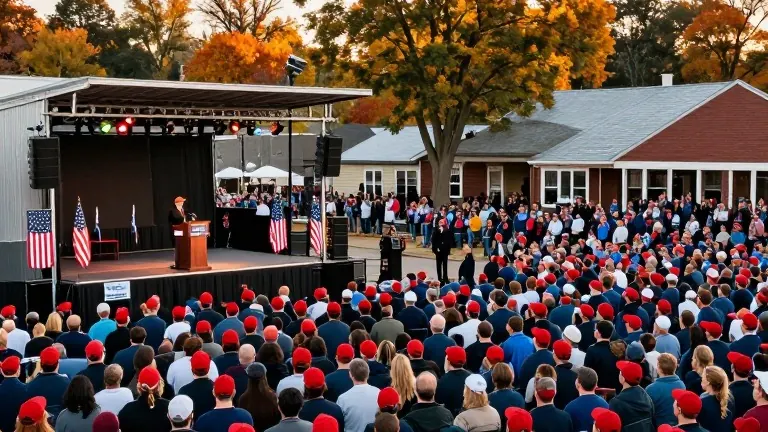
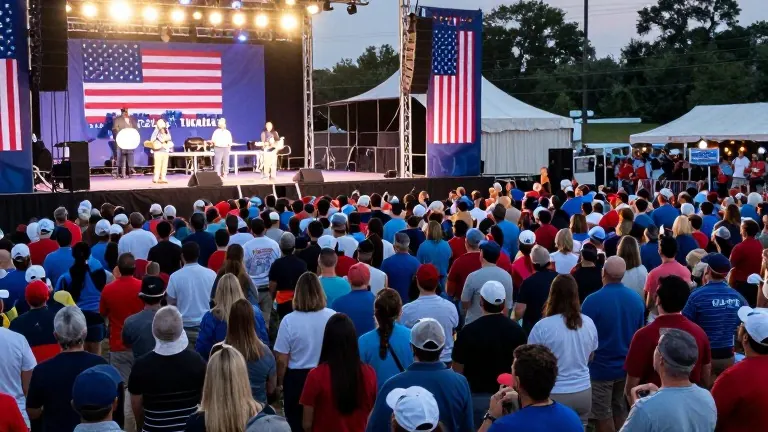
President Donald Trump is in Dubuque, Iowa, on Sunday to kick off a final campaign weekend focused on holding ground rather than expanding it.
The president arrived in the state to support Ashley Hinson, the Republican candidate for U.S. Senate. Hinson is competing in a race that Republicans view as critical for maintaining control of the chamber. The 2nd Congressional District, which includes Dubuque, has also become a focal point as the party works to protect its narrow House majority.
Trump stated that the goal is to secure the Senate. He plans to finish the last stretch of campaigning in Salina, Kansas, on Monday. There, Democrat Adam Hamilton is challenging the incumbent in a bid to become the first Kansas Democrat to win a Senate seat in 94 years.
More than 52 million votes have already been cast in early voting. The president's travel schedule reflects a defensive strategy for the Republican Party. This approach contrasts with his 2024 campaign, when he targeted states that had backed Joe Biden. This year, Trump is prioritizing states he has won by wide margins in the past. Voters in these areas are questioning the economic impact of his tariff policies and the decision to launch a war in Iran.
While Republicans focus on defense, Democrats are facing internal conflict in Michigan. Haley Stevens, the runner-up to Abdul El-Sayed in the Senate primary, endorsed Republican Mike Rogers on Sunday. Stevens said she made the move after El-Sayed told her she was no longer welcome at a Democratic event. She stated that El-Sayed told her to stay away and that she agreed with his assessment.
The endorsement prompted immediate responses from national Democratic leaders. Senate Minority Leader Chuck Schumer said the party remained united in its support for El-Sayed. Senator Kirsten Gillibrand, who leads the Democratic Senatorial Campaign Committee, said the party would reject efforts to divide Democrats. Senator Bernie Sanders, a key supporter of El-Sayed, noted that Stevens lost a close primary but said people across the state are standing with the nominee.
Michigan is a pivotal battleground for Democrats seeking to retake the Senate. Losing that seat would force the party to win races in historically Republican states such as Texas, Ohio, or Kansas to regain control. The stakes are high as the parties prepare for Election Day on Tuesday.
Local voters in Iowa expressed confidence in the president's direction. Jon Lutz, a 60-year-old civil engineer in Dubuque, said he is happy with Trump's second term record. He wants Republicans to keep both chambers to advance the president's agenda. Wendy Kuenzler, a 44-year-old from Burlington, said she does not blame rising gas and grocery prices on Trump. She believes he is on the path to correcting the issues.
The campaign has also revealed tensions within the Republican base. Outgoing Representative Don Bacon of Nebraska said tariffs are not popular in the Midwest. He told CNN that he tried to tell the president about the sentiment. Bacon predicted a debate within the party if Republicans suffer significant losses. Senator Tim Scott of South Carolina, the chair of the National Republican Senatorial Committee, countered that he is confident the GOP will keep the Senate. He said Trump's agenda is on the ballot.
Source: HuffPost