Vance Tests 2028 Messaging in Midterm Rallies
The vice president blends populist nostalgia with culture war themes while managing the political cost of the president's unpopularity.
By Arjun Tanaka ·
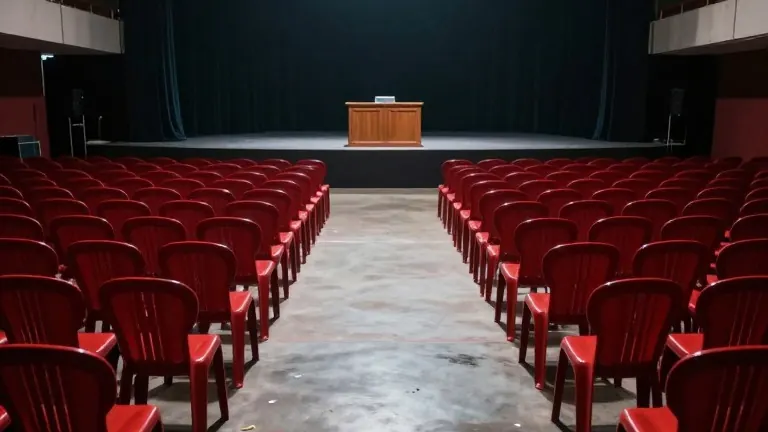
Vice President JD Vance used a speech in Weatherford, Texas, to sharpen his rhetorical style for a potential 2028 presidential run. On Thursday, he mocked Democratic Senate candidate James Talarico, a man Vance said must grapple with his masculinity and whiteness. Vance told the cheering crowd that there was not much for Talarico to grapple with. The performance showed a politician less interested in comedic improv and more focused on a disciplined political pitch.
This speech occurred the same afternoon President Donald Trump rallied in Rock Hill, South Carolina. Both men are engaged in a pre-midterm push, but their delivery styles differ. Vance aims for a more traditional populist tone. He describes an America of his youth defined by pride and unity, specifically referencing the national mood following the attacks of September 11, 2001. He contrasts that era with the present, arguing that local businesses supporting youth football teams have disappeared due to distant political decisions.
In Howell, Michigan, Vance recalled looking at old jerseys and seeing the names of sponsors that no longer existed. He described those businesses as casualties of politicians who did not care about the local economy. This narrative frames Washington elites as the corrupters of a simpler, working-class community. It is a central theme in his recent appearances across the country.
Vance also leans into culture war issues, though he packages them with a focus on traditional values. In North Carolina, he described a time when children from working-class Black and white families played football together without worrying about skin color or privilege. He presents this as a model of harmony that predates modern political movements. He occasionally uses informal language, such as telling a Texas audience he was sweating, to maintain a connection with the crowd.
The vice president faces a specific challenge: supporting Republican candidates while serving an unpopular president. Vance handles this by framing economic pain as an external force rather than a policy failure. In Montana, he compared current gas prices to spikes seen in 2022, 2019, 2001, and 2007. He argued that prices rise whenever a foreign leader throws a tantrum, a tactic that avoids directly blaming the Iran War for the cost of fuel.
He similarly addresses the high price of beef by pointing to consolidation among meatpackers. This allows him to acknowledge consumer pain while sidestepping the anger that Trump's policies have caused among producers. Vance also uses his role as head of the president's anti-fraud task force to build his resume. He tells stories about working as a cashier and having family members use food benefit programs, linking his personal history to federal policy.
Vance's background as a memoirist and military veteran provides him with personal anecdotes that Trump rarely uses. He speaks to voters about economic difficulty and service with a degree of intimacy. The political question remains how this measured approach will compare to the bombast and anger that defined Trump's decade-plus tenure. Vance is testing whether a more eloquent version of the same message can sustain Republican voter enthusiasm.
Source: WWNO