Melbourne birthkeeper faces perjury probe over home death
A coroner is considering referring Emily Lal to prosecutors after phone records contradicted her claim that she acted only as a friend to the deceased mother.
By Alexei Petit ·

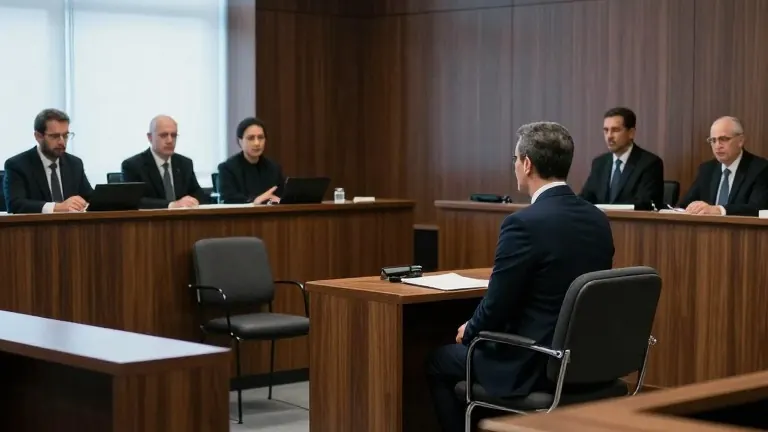
Emily Lal, a Melbourne birthkeeper, may face criminal perjury charges following a review of her testimony in the inquest into the death of Stacey Warnecke. The proceedings heard that forensic analysis of Warnecke's phone revealed communications that clashed with Lal's earlier statements. Coroner Therese McCarthy was told on Monday that she has the authority to refer Lal to the Office of Public Prosecutions.
Warnecke, a 30-year-old nutritionist, died in September 2025 at Frankston Hospital. She had given birth at her home under the supervision of Lal, who was not clinically trained. The couple had paid Lal $6,000 for support during the pregnancy. Warnecke suffered a postpartum hemorrhage, a known complication of childbirth, and died several hours after arriving at the hospital.
The inquest began in June but paused to allow for the digital forensics. Counsel assisting the coroner, Rachel Ellyard, presented the findings of that analysis. The records included a WhatsApp group chat coordinated by Lal for women planning freebirths and a recorded call between Lal and Warnecke. Ellyard argued that this material directly contradicted the evidence Lal gave in June.
In June, Lal told the court that Warnecke hired her primarily as a supportive friend. She stated that the $6,000 payment covered her time and that she provided no medical advice. Lal described her role as helping Warnecke resist the urge to seek medical help during labor. She said she would not call an ambulance unless specifically asked, even if the patient was unconscious.
The recorded call presented in court showed a different dynamic. Warnecke expressed fear of the hospital. Lal responded that Warnecke should be scared, calling the facility "a terrifying place." Lal advised that staying home required a mental state that was "so solid." She also suggested that midwives at home births could accidentally sabotage the process by rushing women to the hospital out of exhaustion.
Ellyard characterized the relationship as "much more structured" and "much more deliberate" than a casual friendship. She noted that Lal was providing advice, referrals, and selling supplements. Ellyard also pointed out that Warnecke's husband, Nathan, had been encouraged to believe his only role was to sit back and support his wife. This stood in contrast to Lal's claim that she was simply sharing her own experiences of freebirthing her children.
Lal declined an invitation to return to the witness stand after the phone analysis was completed. She had originally testified only after receiving a certificate of protection, a legal measure that prevents her evidence from being used against her in future proceedings. The court noted that Lal had previously asked Warnecke three times if she wanted an ambulance after the placenta was delivered and Warnecke lost up to 1.5 liters of blood.
Warnecke agreed to the ambulance on the third request but was already seriously unwell when paramedics arrived. The hospital used its entire blood supply in an attempt to save her. Ellyard told the coroner that Warnecke would have survived if she had been in a hospital at the time of the hemorrhage. She added that Warnecke would also have survived a home birth if a registered midwife had been present, as the condition is treatable if identified immediately.
The coroner will deliver her final findings at a later date. The potential referral to prosecutors hinges on the discrepancy between Lal's description of her role and the documented advice she provided. The Office of Public Prosecutions prepares and conducts criminal matters on behalf of the director if a referral is made.
Source: The Guardian