Round Rock Residents Can Reclaim Rainwater for Native Ponds
A city rebate program supports homeowners who install rainwater collection systems to sustain backyard wetlands for local wildlife.
By Arjun Tanaka ·
The City of Round Rock offers a financial incentive for residents who install rainwater collection systems. This program supports a growing trend of adding water features to residential landscapes to support local ecology. The initiative aligns with the work of Claire Sorenson, a member of the Austin Chapter of the Native Plant Society of Texas. She published a guide in the Fall 2026 issue of Texas Native Plants magazine on how to build these habitats.
Sorenson lives in south Austin and describes finding aquatic species in her yard after installing a small pond. She notes that even arid regions naturally contain water sources like washes or springs. The goal of this approach is to provide habitat for wildlife that relies on fresh water. Sorenson states that aquatic wildlife is often the first group to suffer when water sources deplete. She found the process of building a pond to be easier than expected and rewarding.
The basic components for a functional pond include a container, untreated water, and native plants. Homeowners can use metal livestock troughs, plastic liners, or large plastic tubs. The water source must be free of chlorine, which is toxic to aquatic life. Chlorine can be removed by letting tap water sit for 24 hours or by using collected rainwater. Sorenson recommends using native plants to support local wildlife.
She lists specific plants that have thrived in her ponds. These include Whitetop Sedge, Cardinal Flower, and Marsh Obedient Plant. Other species on her list are Halberd Leaf Hibiscus, Mexican Primrose Willow, and Water Hyssop. Additional plants she identifies are Water Willow, Hairy Water Clover, Pickerelweed, and Delta Arrowhead. The Native Plant Society of Texas maintains a database with a more detailed list of suitable species.
Mosquito control is a primary concern for many homeowners. Sorenson suggests using dunks from hardware stores or introducing mosquito fish. The method chosen depends on the desired wildlife. If the goal is to support amphibians and dragonfly larvae, dunks are the preferred option. Mosquito fish will eat amphibian eggs and tadpoles. Dunks are inexpensive and require monthly replacement.
To allow amphibians to enter and exit the water, a ramp is necessary. Sorenson uses stacked rocks to create this slope. Toad eggs hatch within 24 to 48 hours. The resulting tadpoles develop legs and leave the pond in about 20 to 30 days. She does not feed the tadpoles, noting that they consume algae and small bugs already present in the pond. Rocks inside the water also provide perches for birds and insects.
An aerator or water filter is not required for these small ponds. Plants oxygenate the water and keep it clean. Sorenson advises against strong currents, as frogs and toads lay eggs in still water. A small floating solar fountain can be added to attract birds. Hair algae may appear in new ponds but can be scooped out. As other plants grow, they shade out the algae.
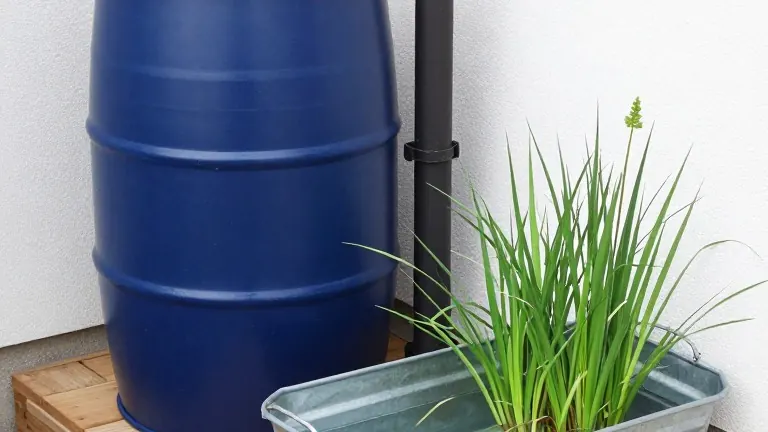
Homeowners can purchase water plants from local nurseries. Hill Country Water Gardens near Austin and Green Star Wetland Plant Farm near Houston are two examples. A rainwater collection system can range from a 55-gallon barrel to larger tanks. Sorenson connects her tanks to gutter downspouts using 3-inch PVC pipes. The water can be pumped into the pond or moved by gravity if the tank is raised. A filter basket prevents debris from clogging the system.
The City of Round Rock confirms that its water customers are eligible for a rebate on rainwater collection systems. This financial support lowers the cost of installing the infrastructure needed to maintain these backyard wetlands. Sorenson hopes this setup inspires others to support aquatic species in their own landscapes. The presence of these habitats provides critical fresh water for birds, insects, and amphibians.
Source: City of Round Rock