Breaking: Election Day is here! Make your selections: The South Central region leads the vote
Voters across Texas, Oklahoma, Louisiana, and Arkansas are casting ballots to decide key Senate and governor races as the nation determines control of Congress.
By Alexei Petit ·
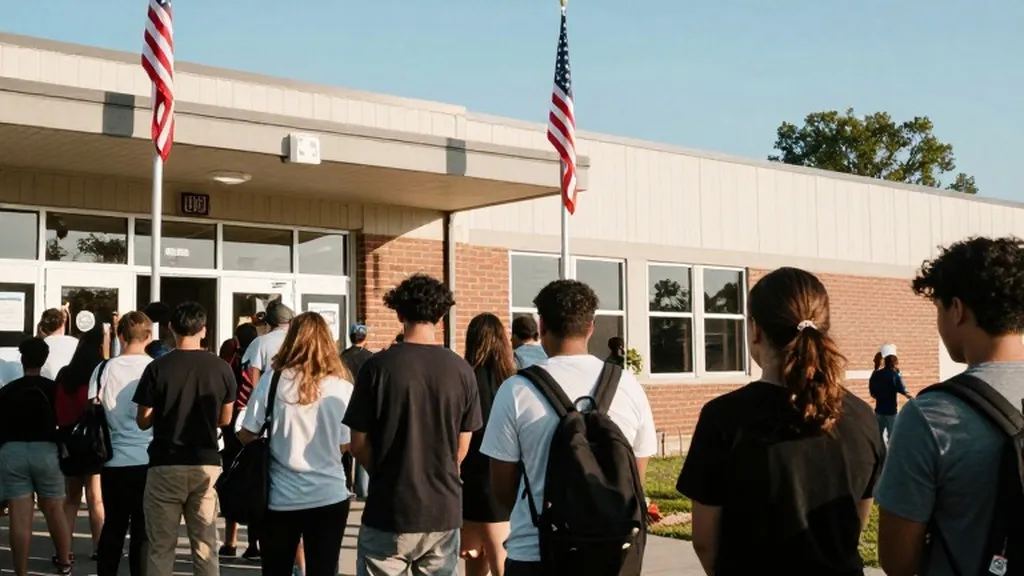
Today is a pivotal moment in American democracy as voters head to the polls for the midterm elections, which are described by the Associated Press as a referendum on President Donald Trump's second term. The outcome of these races will determine which party controls Congress for the final two years of the current administration. With polls open across the country, the atmosphere is charged with anticipation as millions of citizens seek to express their views on the state of the nation. The Associated Press notes that many voters are struggling with high prices and are angry over an unpopular war with Iran, issues that have dominated the campaign trail in recent weeks. This election is not just about selecting representatives but about shaping the legislative agenda for the coming years.
In the United States House of Representatives, all 435 seats are up for grabs in this cycle. Republicans currently hold 218 seats, while Democrats hold 214, with one independent and several vacancies. For Democrats to secure a majority, they need a net gain of three districts, whereas Republicans can afford to lose no more than two seats. According to Ballotpedia, there are 46 battleground districts, with 25 held by Democrats and 21 by Republicans. The stakes are high in these competitive areas, where small shifts in voter turnout could change the balance of power in the chamber. Many incumbent members have chosen not to run again, with 60 House incumbents, including 23 Democrats and 37 Republicans, stepping aside for this election.
The United States Senate race involves 35 of the 100 seats, including 33 regular elections and two special elections for the remainder of the terms held by Marco Rubio and JD Vance. Republicans hold 53 seats, Democrats hold 45, and two independents caucus with the Democrats. To achieve a majority, Democrats need a net gain of four seats, while Republicans can lose only two. Eleven senators, four of them Democrats and seven Republicans, are not seeking reelection. The winners of these races will begin their six-year terms on January 3, 2027. The Associated Press highlights that one or two seats could tip the balance in either chamber, making every vote in the battleground states crucial to the final outcome.
Governor's races are also a major focus, with 36 governorships on the ballot. Heading into the election, Republicans hold 26 governor's offices and Democrats hold 24. Of the offices currently on the ballot, each party holds 18. Nineteen of these races do not have an incumbent on the ballot, largely due to term limits or voluntary retirements. Democrats would need a net gain of two governorships to achieve a nationwide majority, a position Republicans have held since 2010. The Associated Press identifies several competitive races, including those in Texas, Florida, and Iowa, where the outcome could shift the balance of power in state governments across the country.
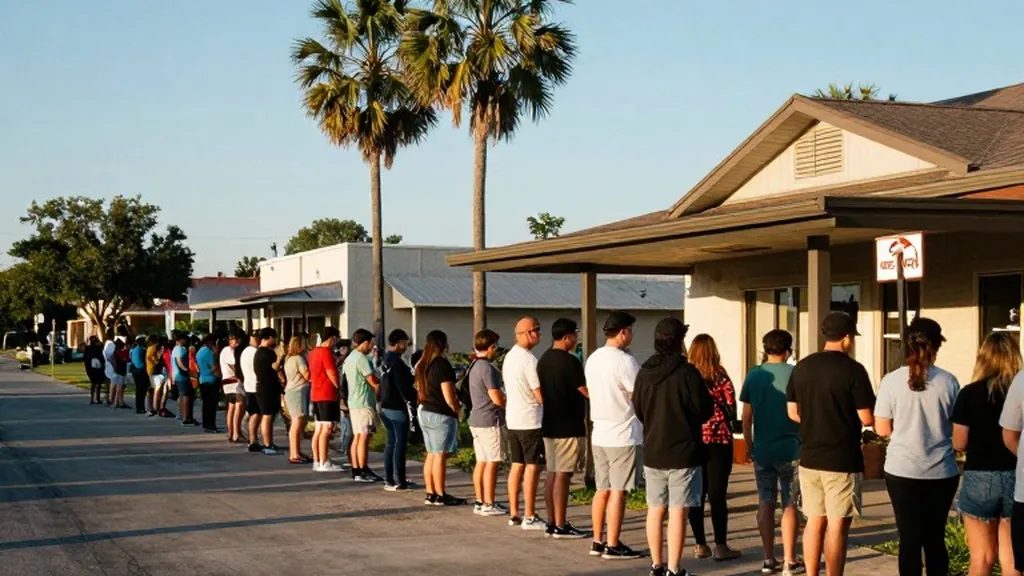
In the South Central region, the focus is on key races in Texas, Oklahoma, Louisiana, and Arkansas. In Texas, polls are open from 7 a.m. to 7 p.m. The state has an open Senate seat and a governor's race where incumbent Greg Abbott is seeking reelection. The Associated Press notes that Republican Attorney General Ken Paxton, who was backed by President Trump over Senator John Cornyn in the primary, is running against Democrat James Talarico. In Oklahoma, polls are also open from 7 a.m. to 7 p.m., with both a Senate race and a governor's race featuring open seats. Voters in these states are deciding the direction of their state governments in a region that has become a central battleground for national control.
Louisiana voters have polls open from 6 a.m. to 8 p.m. for Tuesday elections, with a Senate race for an open seat and no governor's race on the ballot this cycle. In Arkansas, polls are open from 7:30 a.m. to 7:30 p.m. The state is deciding its Senate race, where incumbent Tom Cotton is running for reelection, and its governor's race, where incumbent Sarah Huckabee Sanders is seeking another term. These races are critical for both parties as they look to solidify their hold on the South Central region. The Associated Press reports that the mood in these states is one of careful deliberation, with voters weighing the national issues against local concerns.
The Associated Press describes the election as a referendum on the current administration, with polling showing that 35 percent of U.S. adults approve of President Trump's job performance. Only 25 percent approve of his handling of the economy, and about seven in ten say the country is heading in the wrong direction. More than 57 million people had already voted as of Monday, surpassing the early vote totals from four years ago in many closely watched states. Republicans are bracing for the possibility of losing the House while fighting to hold the Senate. Democrats, meanwhile, are described as cautiously optimistic, hoping to make gains in both chambers.
President Trump held dozens of rallies leading up to the election, ending his schedule in Salina, Kansas, where he urged voters to pretend he was on the ballot. His schedule included stops in Mississippi, South Carolina, and Texas. Many Republican candidates have kept their distance from the President during the final days of the campaign. Trump has continued to make claims about voting fraud, including allegations that noncitizens vote in large numbers. His administration has filed lawsuits in Alaska and California, and Democrats fear interference as the Justice Department threatens to prosecute local election officials. These developments have added a layer of complexity to the election administration process.
The 2026 elections are likely to be the most expensive in history, according to the Associated Press. Republican committees outraised and outspent Democratic committees, helped by Trump-affiliated groups and Elon Musk. However, at the candidate level, Democrats outraised their opponents. A significant portion of Republican general election TV ad spending, 88.1 percent, went to states and districts that Trump won in 2024. This includes more than $850 million in areas where he won by 10 points or more, according to an AP analysis of AdImpact data. This spending strategy reflects a focus on consolidating support in strong Republican areas while still competing in swing districts.
RNC Chairman Joe Gruters stated that everything depends on turnout, saying that if Republicans turn out their voters, they will win. In contrast, DCCC Chair Rep. Suzan DelBene said that the American people are angry and want change. Voter Mark Barker of Palm Beach Gardens, Florida, expressed his support for the President, saying he thinks Trump is doing an awesome job. On the other side, James Moore, a 57-year-old librarian in Raleigh, North Carolina, noted that he is paying more for taxes, healthcare, and everything else. These quotes illustrate the divided sentiments among voters as they head to the polls today.
If Democrats win even one chamber, investigations and possible impeachment proceedings become likely. House Democratic Leader Hakeem Jeffries would be the first Black speaker if his party gains control, and he has outlined a 100-day agenda focusing on the cost of living and oversight. A strong Democratic night would also boost potential 2028 candidates Gavin Newsom, JB Pritzker, and Pete Buttigieg. Republicans tried to beat the midterm pattern, where a president's party almost always loses seats, through redistricting. However, new districts in Florida and elsewhere may not vote as drawn, adding uncertainty to the final results.