North Dakota Ballot Test
Voters will decide next week whether to mandate free school meals for all public students in the deep-red state.
By Arjun Tanaka ·
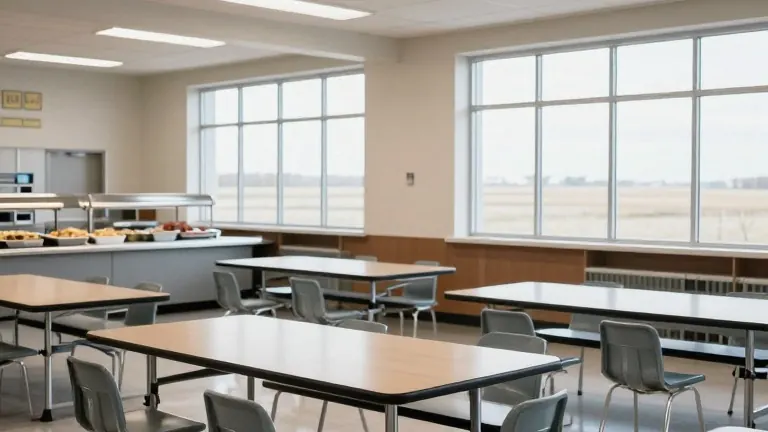
North Dakota voters will cast ballots on Measure 2 next week to determine if the state will guarantee free breakfast and lunch for every public school student. The measure bypasses the state legislature and seeks to amend the state constitution to lock in the funding.
The proposal requires schools to provide one breakfast and one lunch daily to all students. Public charter schools are included in the mandate, while private and tribal schools have the option to participate. The state government would cover costs that are not reimbursed by the federal government.
The path to the ballot began after state lawmakers failed to pass similar legislation in two consecutive sessions. In January, the bill cleared the state House with a 55 to 38 vote. It then failed in the Senate, where it lost 24 to 22. Backers gathered 49,000 signatures to place the measure on the November ballot.
Support for the initiative is high despite the state’s conservative political leanings. Polls show support at up to 82 percent. This level of favorability appears in a state that Donald Trump won by a 36 percent margin in the 2024 election. Republicans currently hold a supermajority in the statehouse.
Robin Nelson, chair of Together for School Meals, said backing is sky-high among families with young children, teachers, and farmers. Nelson, who describes herself as right of center, previously managed Republican campaigns. She views the program as a financial relief for working families.
“The price of everything is going up. This is one way we could really help our working families,” Nelson told HuffPost. She noted that the program also serves as a tool to attract new residents and businesses to the state.
The state estimates the program will cost between $124 million and $134 million every two years. The funds would primarily come from the state’s Legacy Fund, which is derived from oil and gas revenue. The current income cap for free meals is approximately $74,000 for a family of four. This threshold leaves many working-class families paying out of pocket.
The measure faces opposition from some lawmakers who view a constitutional amendment as an intrusion on their budgetary authority. Republican Gov. Kelly Armstrong opposed the plan in July. She argued that mandated spending from the Legacy Fund takes money away before other state priorities are funded.
Voters will also decide on Measure 1 during the same election. That measure would raise the threshold for passing constitutional amendments from 50 percent to 60 percent of the vote. The Republican-led legislature placed Measure 1 on the ballot to make future initiatives harder to pass. The Fairness Project, a progressive group, has spent about $1.7 million opposing Measure 1.
Amy Jacobson, executive director of Prairie Action ND, said the effort is grassroots-led. She noted that the coalition spent three years trying to pass legislation in Bismarck before turning to the ballot. Jacobson said the measure belongs in the constitution because it enshrines the guarantee of public education.
Source: HuffPost