Stranded by a Closed Venue, the National Symphony Orchestra Plays Its Season in Borrowed Halls
With ticket revenue down 50% and a reduced schedule, the 95-year-old ensemble fights to maintain its identity while the Kennedy Center remains dark.
By Arjun Tanaka ·
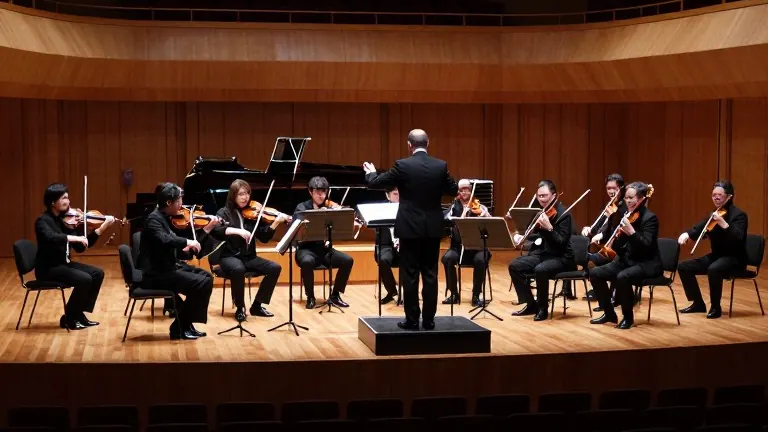
The National Symphony Orchestra, an institution that has called Washington, D.C., home for over half a century, is currently without a home. The John F. Kennedy Center for the Performing Arts, the orchestra’s primary venue since 1971, closed its doors on Sept. 15. This shutdown leaves the 95-year-old ensemble as a musical nomad, forced to perform in borrowed spaces while grappling with a budget that is expected to shrink by half.
The closure did not happen in a vacuum. It followed months of declining ticket sales, public boycotts, and a federal court battle concerning the addition of President Donald Trump’s name to the building’s exterior. Trump assumed control of the center in early 2025 after removing President Deborah Rutter and several board trustees. The suddenness of the event caught music director Gianandrea Noseda off guard. “The news of the closing of the Kennedy Center came like a cold shower,” Noseda said. “My first reaction was, ‘What will we do now if we don’t have our home?’”
The administrative chaos compressed the orchestra’s planning timeline. Most symphonies announce their seasons in early spring, but the NSO had to wait for budget approval from the board, pushing the announcement to mid-August. That left only six weeks to organize a season that began just 11 days after the Kennedy Center locked its gates. The orchestra scrambled to secure six alternative venues in the greater D.C. region, a logistical feat that critics describe as a recipe for financial strain.
On Sept. 26, the ensemble opened its season at the Music Center at Strathmore in Bethesda, Md. The program featured new work by Carlos Simon alongside classics by Tchaikovsky and Respighi. Anne Midgette, a former classical music critic for The Washington Post, described the evening as bittersweet. “It was so great to see them together, but so amazing that this major orchestra in a major city has to be performing outside of its hall,” she said. The packed house roared in approval, but the financial reality behind the applause remains severe.
The Washington Post reported in August that ticket revenue for the season is expected to drop by approximately 50%, with donations down by a quarter. These cuts are attributed in part to massive reductions in the Kennedy Center’s development department. The orchestra has also lost key personnel, including executive director Jean Davidson, who resigned in March citing the turmoil at the center. Rick Barber, the associate principal double bassist who joined the NSO in 1995, acknowledged the uncertainty. “There was definitely a lot of uncertainty, I would say, anxiety,” Barber said.
Noseda has chosen to stay, extending his contract through 2031. He rejected the idea of leaving after Rutter was fired, calling it “too easy” and perhaps “cowardly.” Instead, he is using the displacement to reach new audiences in different locations. “The idea is to see the glass half full and not half empty,” he said. The orchestra will play about half as many concerts this season as in previous years. Whether this reduced schedule and the financial pressure will alter the ensemble’s identity is a question critics are watching closely.
The NSO’s struggle is part of a wider trend of financial stress for American symphonies, with the Phoenix Symphony recently shutting down. Midgette noted that the cost of attending live events, combined with the price of gas and groceries, is challenging for many patrons. “We live in a really challenging time for the arts right now,” she said. The orchestra must now prove that audiences are still invested in its survival, testing its resilience in venues far from its traditional stage.
Source: WRR