Texas Democrats Flip Governor, Senate, and House in Historic Sweep
The shift marks the first time since 2002 that Democrats control the Texas state House, while also securing the governorship and a U.S. Senate seat.
By Alexei Petit ·
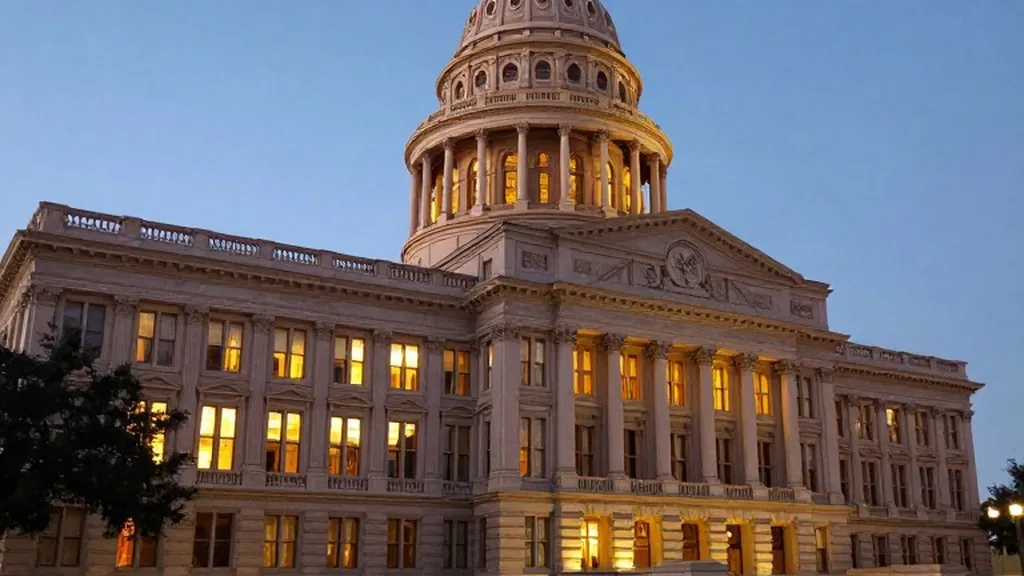
Texas voters delivered a decisive shift in power on Tuesday, electing a Democratic governor, a Democratic U.S. senator, and flipping the state House to Democratic control. The results mark the first time Democrats have held the Texas House since Republicans took the chamber after the 2002 election. This trifecta of wins places the party in full command of the state government, a significant departure from the Republican dominance that had characterized Texas politics for over a decade.
According to the Associated Press, Gina Hinojosa has become the state's first Democratic governor since George W. Bush defeated Ann Richards in 1994. The victory breaks a long streak of Democratic exclusion from statewide races in Texas, a state where Democrats had not won a major office for more than three decades. This outcome signals a major realignment in the South Central region, where Republican holdouts in state governments are now facing new leadership in multiple states.
The Associated Press reported that Democrats also won the open U.S. Senate seat in Texas. This victory is part of a broader Democratic surge that has seen the party gain control of the U.S. Senate nationwide. The change in the state's congressional delegation will affect the balance of power in Washington, with the new senator joining a Democratic majority in the upper chamber. This shift follows a period where Texas was a reliable source of Republican senators.
Statewide, the control of the Texas House has moved to the Democrats, who will now set the legislative agenda for the state. The Associated Press noted that this is the first time the party has controlled that body since 2002. The shift means that new Democratic leadership will oversee the passage of state laws, including those affecting tax rates, education funding, and infrastructure. The previous Republican majority, which had been in place for over twenty years, has been replaced by a new Democratic bloc that promises to focus on cost of living issues.
In the neighboring state of Oklahoma, voters also moved toward the Democrats in key races. Ballotpedia data indicates that the state had an open Senate seat and an open governor's race on the ballot. While specific final tallies for every office in Oklahoma are still being finalized in some districts, the national trend shows Democrats gaining ground in the South Central region. The shift in Texas has drawn attention to how other Southern states, including Louisiana and Arkansas, might see similar pressure on their Republican-led statehouses in the coming years.
The Associated Press highlighted that this election represents the biggest single-election change of partisan power in state governments since 2010. Katie Owens Hubler, director of elections and redistricting at the National Conference of State Legislatures, stated that the scope of the change is unprecedented in recent memory. In Texas, the victory is particularly significant because it breaks a pattern of Republican trifectas that had persisted for many years. The new Democratic governor will now have the power to appoint key state officials and set policy priorities without the need for bipartisan compromise in the executive branch.
Mark Jones, a political science professor at Rice University in Houston, suggested that the Republican redistricting efforts in Texas may have mobilized additional Democratic voters. He noted that the attempt to redraw congressional maps to favor Republicans backfired, helping to drive gains in the statehouse. Jones stated that the victory is partly a reaction to the policies of President Donald Trump, whose party lost control of Congress. The AP Voter Poll found that about six in ten voters disapprove of how Trump is handling the presidency, a sentiment that appears to have fueled the Democratic wave in the South.
In the U.S. House, Democrats gained control nationwide, a result that affects all states including Texas. The Associated Press reported that Democrats won 233 of the 435 House seats, giving them a clear majority. In Texas, the party retained seats in the Rio Grande Valley, where Republicans had hoped to flip districts. Democratic Reps. Henry Cuellar and Vicente Gonzalez won reelection, while Democrat Bobby Pulido unseated Republican Rep. Monica De La Cruz. This result reflects a substantial shift among Hispanic voters, with the AP Voter Poll indicating that a large portion of this demographic moved away from the Republican party compared to the 2024 election.
The new Democratic leadership in Texas faces immediate pressure to address the concerns that drove voters to the polls. The Associated Press noted that issues such as the cost of groceries, housing, healthcare, and gas were central to the campaign. The incoming governor and legislative leaders have pledged to focus on these economic priorities. They have indicated that the next legislative session will see efforts to lighten the tax burden on the middle class and expand access to healthcare. The shift in power also means that Democratic governors in other states, such as Georgia and Ohio, will have more colleagues with whom to coordinate on national issues.
For Texas residents, the change in state government means that the rules governing their daily lives will be written by a new political majority. The Associated Press reported that state governments shape policies on a wide array of topics, including school choice, data center development, and the use of artificial intelligence in law enforcement. With Democrats now in control of the Texas House, the governor's office, and holding a U.S. Senate seat, the state will be a key player in the new era of divided government. The next Congress, which begins in January 2027, will see a full Democratic takeover of both chambers, a result that reshapes the federal landscape for the next two years.