80% of Balcones Heights Residents Are Minority, Citing Figure in Push to Drop ICE Deal
City Council delayed a final vote on the 287(g) program after a protest outside City Hall featured state and local leaders.
By Alexei Petit ·
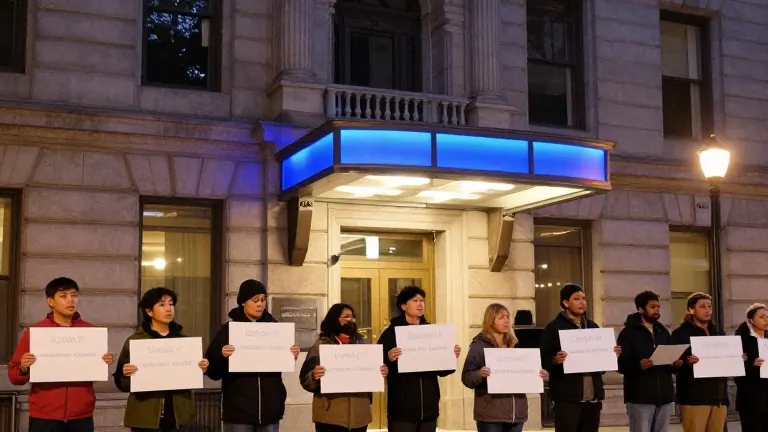
Eighty percent of the people living in Balcones Heights, Texas, are members of minority groups, a statistic cited by a local advocate to pressure city leaders regarding their participation in a federal immigration program. Rebecca Flores, who leads the Bexar County Democratic Party’s Immigration Committee, used that figure during a demonstration to argue that the city’s agreement with U.S. Immigration and Customs Enforcement, or ICE, could erode trust among residents.
The City of Balcones Heights did not reach a final decision on Monday regarding whether to rescind its partnership with ICE under the federal 287(g) program. City Council members discussed the issue during a meeting but left the matter unresolved. The delay follows a gathering outside Balcones Heights City Hall on Hillcrest Drive, where community members and political figures urged leaders to reconsider the city’s participation in the agreement.
Texas State Senator Jose Menendez attended the demonstration and spoke in favor of ending the partnership. He argued that the deal could discourage residents from visiting local businesses or reporting crimes to police. Menendez stated that he believes the agreement is a mistake and that city leaders should stop. He also noted that his legislative office is located at Wonderland of the Americas, a property owned by the city. Menendez said he may reconsider his lease if the city continues with the agreement, expressing a view that he cannot remain in a city that allows its law enforcement to become immigration officers.
The 287(g) Task Force Model allows trained and authorized local officers to perform specific immigration enforcement duties while conducting routine police work. These duties occur under the oversight of ICE. The agency states that the program is designed to strengthen cooperation between federal immigration authorities and local law enforcement. Flores expressed concern that the agreement could affect residents' trust in local police, particularly among people who fear being questioned about their immigration status. She also voiced worry about immigration detention and its potential effects on families.
The gathering on Monday followed an August call to action from state and federal lawmakers. Those officials urged six cities in Bexar County to reconsider their 287(g) agreements with ICE. Balcones Heights was among the six cities named in that appeal, alongside China Grove, Hollywood Park, St. Hedwig, Sandy Oaks, and Von Ormy. As of Monday evening, the decisions to work with federal immigration authorities had not changed in those six municipalities.
Financial incentives for participating agencies were a point of discussion during the demonstration. The U.S. Department of Homeland Security states that eligible agencies may qualify for reimbursement for certain officer salaries, benefits, and overtime. Agencies may also receive stipends for equipment and technology, depending on program requirements and qualifying enforcement activities. Adam Castillo, a resident advocate, said he hopes city leaders will weigh the community’s concerns when considering these financial benefits. Castillo stated that he hopes the council will listen to residents and side with them rather than the money.
Other community members spoke during the City Council meeting, echoing the sentiments of Flores and Menendez. Reporters attempted to speak with the Balcones Heights mayor and other City Council members during the meeting but were unable to do so. A request for a written statement was also sent to the City of Balcones Heights. Additionally, requests for response were submitted to U.S. Representatives Marc LaHood, Carrie Isaac, and Chip Roy, who were part of the August call to action. Offices for those representatives had not responded as of Monday night.
Source: KSAT-TV