South Central Voters Face Record Spending in Midterm Money War
In Texas and neighboring states, the most expensive election in history features a split funding strategy where Republican committees dominate while Democratic candidates maintain a financial edge at the local level.
By Alexei Petit ·
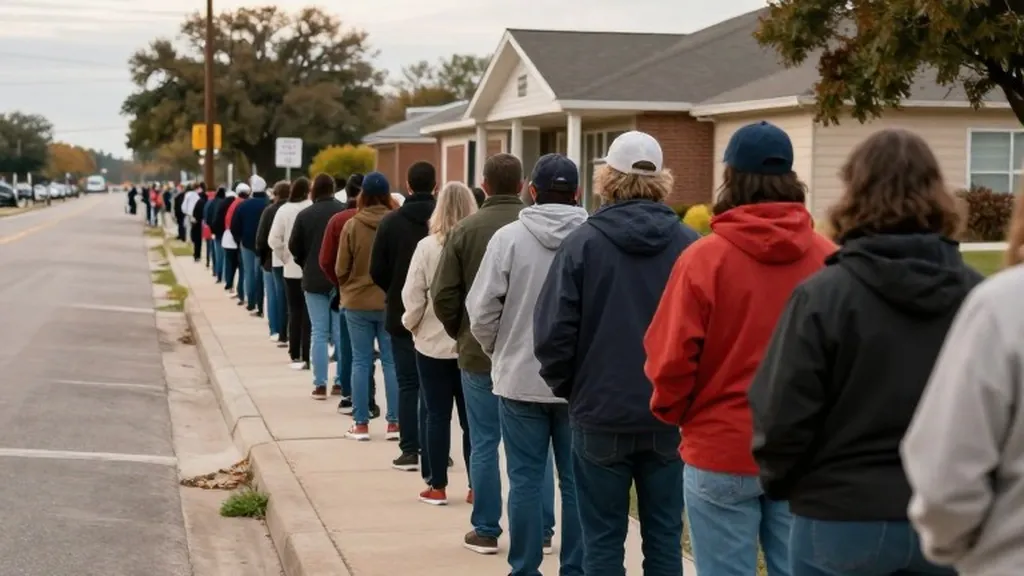
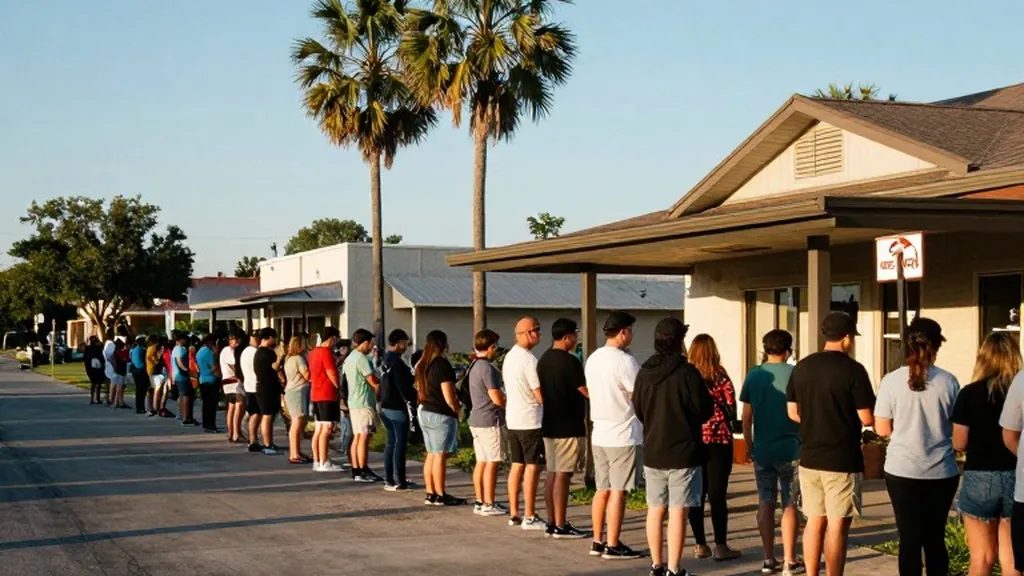
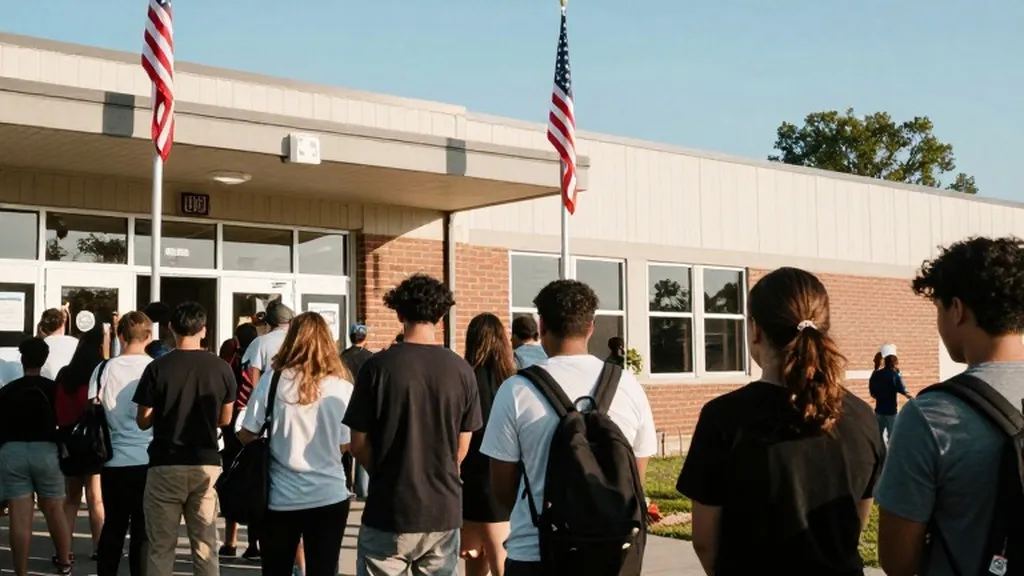
Polls open across the South Central United States on this Tuesday, November 3, 2026, marking the halfway point of President Donald Trump's second term. In Texas, Oklahoma, Louisiana, and Arkansas, voters are casting ballots in what analysts are calling the most expensive election in history. The financial scale of this contest has reshaped campaign strategies, with money flowing into these states at unprecedented levels. The Associated Press notes that the 2026 elections will likely set new records for total expenditure, a development that has significant implications for the political landscape in the region.
The funding dynamics reveal a distinct divergence between party committees and individual candidates. Republican committees have outraised and outspent their Democratic counterparts, a trend driven in part by contributions from Trump-affiliated groups and high-profile donors like Elon Musk. This committee-level advantage has allowed Republican campaigns to dominate television advertising in key districts. However, at the candidate level, Democrats have managed to outraise their opponents, creating a complex financial battlefield where both sides have strengths in different parts of the funding pipeline.
According to an Associated Press analysis of AdImpact data, 88.1 percent of Republican general election television ad spending went to states and districts that President Trump won in 2024. This concentration of resources includes more than $850 million spent in areas where he won by ten points or more. In the South Central region, this means that much of the advertising weight in Texas and Oklahoma has focused on districts with strong Republican leanings. The strategy aims to consolidate support in these areas while using committee funds to support candidates in competitive races.
In Texas, where polls are open from 7 a.m. to 7 p.m., the Senate race features Republican Attorney General Ken Paxton against Democrat James Talarico. Trump backed Paxton over incumbent Senator John Cornyn in the primary, signaling a shift in party dynamics. The governor's race pits incumbent Greg Abbott against his Democratic challenger. In Oklahoma, where polls are also open from 7 a.m. to 7 p.m., voters are deciding an open Senate seat and an open governor's race. Louisiana polls open earlier, at 6 a.m. for Tuesday elections, and close at 8 p.m., with an open Senate seat on the ballot. Arkansas polls open at 7:30 a.m. and close at 7:30 p.m., with incumbent Senator Tom Cotton and Governor Sarah Huckabee Sanders seeking re-election.
The Associated Press describes the election as a referendum on Trump's second term, with voters struggling with high prices and angry over an unpopular war with Iran. Polling data from the AP and NORC shows that 35 percent of U.S. adults approve of Trump's job performance, while 25 percent approve of his handling of the economy. About seven in ten adults say the country is heading in the wrong direction. In these South Central states, where economic concerns are prominent, these national sentiments are likely to influence local voting patterns. More than 57 million people had already voted as of Monday, surpassing the early vote of four years ago in many closely watched states.
Republican National Committee Chairman Joe Gruters stated that everything depends on turnout, asserting that if they turn out their voters, they win. This sentiment reflects the Republican strategy of leveraging their committee funding to drive voter participation in key districts. On the other side, House Democratic Leader Hakeem Jeffries has outlined a 100-day agenda focused on the cost of living and oversight, aiming to appeal to voters concerned about economic pressures. The Democratic Party is cautiously optimistic, hoping that their candidate-level funding advantage will help them gain seats in the House and potentially the Senate.
In the South Central states, the new congressional maps are a factor in the race. Texas is using a new map after mid-decade redistricting, which could affect the competitiveness of certain districts. The Associated Press notes that Republicans were bracing to lose the House and fighting to hold the Senate, with one or two seats potentially tipping either chamber. Democrats need a net gain of three districts for a House majority and four seats for a Senate majority. The financial resources deployed in these states will be critical in determining whether these targets are met.
Voters in these states are making decisions amidst a backdrop of high spending and intense campaigning. The Associated Press reports that Trump held dozens of rallies, ending Sunday in Salina, Kansas, where he urged voters to pretend he was on the ballot. His schedule included stops in Mississippi, South Carolina, and Texas, indicating the party's focus on the South. Many Republican candidates kept their distance from the president, a move that may reflect an attempt to balance national and local messaging. The presence of significant funds from Trump-affiliated groups has been a notable feature of the campaign, with some candidates benefiting from the increased advertising spend.
In Oklahoma, the open Senate and governor races are expected to be closely watched, with both parties investing heavily in advertising. The state's poll hours, from 7 a.m. to 7 p.m., provide a window for voters to engage with the new candidates. In Louisiana, the early opening of polls at 6 a.m. for Tuesday elections allows for a longer voting period, which may facilitate higher turnout. The open Senate seat in Louisiana is part of the broader fight for Senate control, where Democrats need to gain four seats for a majority. The financial resources deployed in these races will be a key factor in the outcome.