Trump cancels tele-rallies to visit Iowa and Kansas as early voting surges
The president reversed a schedule change less than a day later, while federal officials confirmed a probe into an Alaska ballot anomaly and Democrats in Michigan continued public disagreements.
By Alexei Petit ·
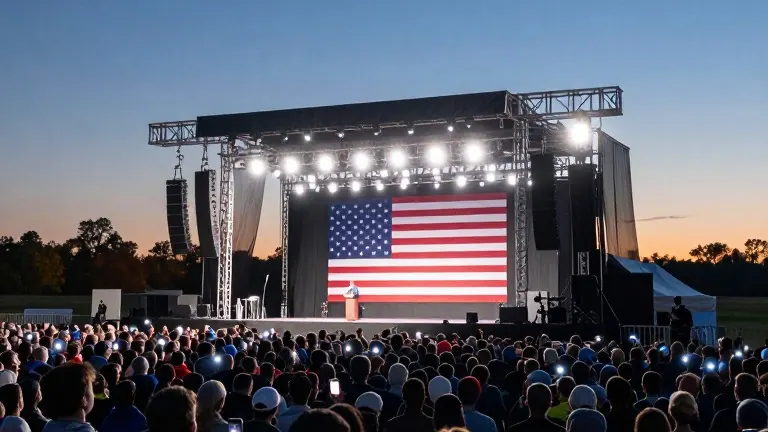
President Donald Trump changed his weekend travel plans Friday to hold in-person campaign rallies in Iowa and Kansas. The president had canceled those visits less than 24 hours earlier, but he reversed course after receiving calls from local party officials. Trump said those contacts preferred his live presence over a remote broadcast. "They said, 'If you can go, you would be better than a tele-rally,'" he told reporters. The two states hold competitive Senate races that will determine if Republicans maintain their narrow majority in the chamber.
The scheduling shift occurred as early voting numbers climbed sharply nationwide. An Associated Press analysis of voting data shows nearly 10 million more Americans cast ballots five days before Election Day than at the same point in 2022. The increase is most visible in states with tight Senate contests. Early voting in Iowa and Kansas is up roughly 30% compared to the previous midterm cycle. Both parties believe the higher turnout favors their respective candidates, citing affordability and the president's approval ratings as the main drivers of voter engagement.
Trump arrived in Daytona Beach, Florida, on Friday night to prepare for his return to the Midwest. He has already visited Kansas and Iowa this month to support Republican candidates. In Kansas, he is backing Sen. Roger Marshall, whom he called "fantastic" during a Friday interview with a Kansas City radio station. Trump credited Marshall with pushing his administration to expand tax-free use of red-dyed diesel for farmers. He criticized Marshall's Democratic opponent, Adam Hamilton, a Methodist pastor, as a "radical" who has "caused turmoil with the church because he's so liberal."
The administration also moved to investigate a potential voter confusion issue in Alaska. U.S. Attorney Michael Heyman confirmed on Friday that a probe into a candidate using the same name as the Republican incumbent has been underway for months. Law enforcement sent additional assets to the state this week after reports indicated the campaign of Democratic candidate Mary Peltola may have been involved in recruiting Dan J. Sullivan to run. Peltola denied on Thursday that she knew about the effort to add a second candidate with her opponent's name to the ballot. The Justice Department stated it wants to isolate ballots ranking Dan J. Sullivan to test the level of confusion among voters.
Public disputes among Michigan Democrats continued in the final week before the general election. Rep. Haley Stevens appeared on CNN to say she would vote for her primary rival, Abdul El-Sayed. She called on El-Sayed to repair relations with Jewish and Black voters. Stevens made these remarks hours after her fiancé said he would vote for El-Sayed's Republican opponent, Mike Rogers. Stevens then agreed to campaign alongside El-Sayed and Rep. Jim Clyburn in Detroit on Sunday. On Friday, she released a statement criticizing El-Sayed's past rhetoric and an advertisement linking U.S. support for Israel to rising grocery prices. "Abdul promises to get money out of politics," Stevens wrote. "He can begin by getting Israel out of his explanation for everything Michigan cannot afford."
El-Sayed responded by touting his primary victory over Stevens. He said in a statement that while she "seems intent on relitigating a primary.. let's all focus on the task at hand: beating Mike Rogers." El-Sayed has apologized for some of his past comments while attempting to unify the Democratic base in the state. The general election in Michigan will feature El-Sayed against Rogers for the open Senate seat.
Voting trends in other key states show similar increases in advance participation. In Texas, more than 6.3 million residents had voted early as of Wednesday, compared with 4.2 million at the same point in 2022. That represents a 50% increase. Advance voting in Maine, Michigan, North Carolina, and Kansas is up more than 30% from the previous midterm. In South Carolina, where voters are choosing a successor to the late Sen. Lindsey Graham, early voting is up 83%. Republicans have expressed concern that high costs and dissatisfaction with Trump may suppress turnout, while Democrats are focusing their campaigns on those same economic issues.
Source: KPRC-TV